Beat Singapore's Humidity Before Your Freezer Ices up
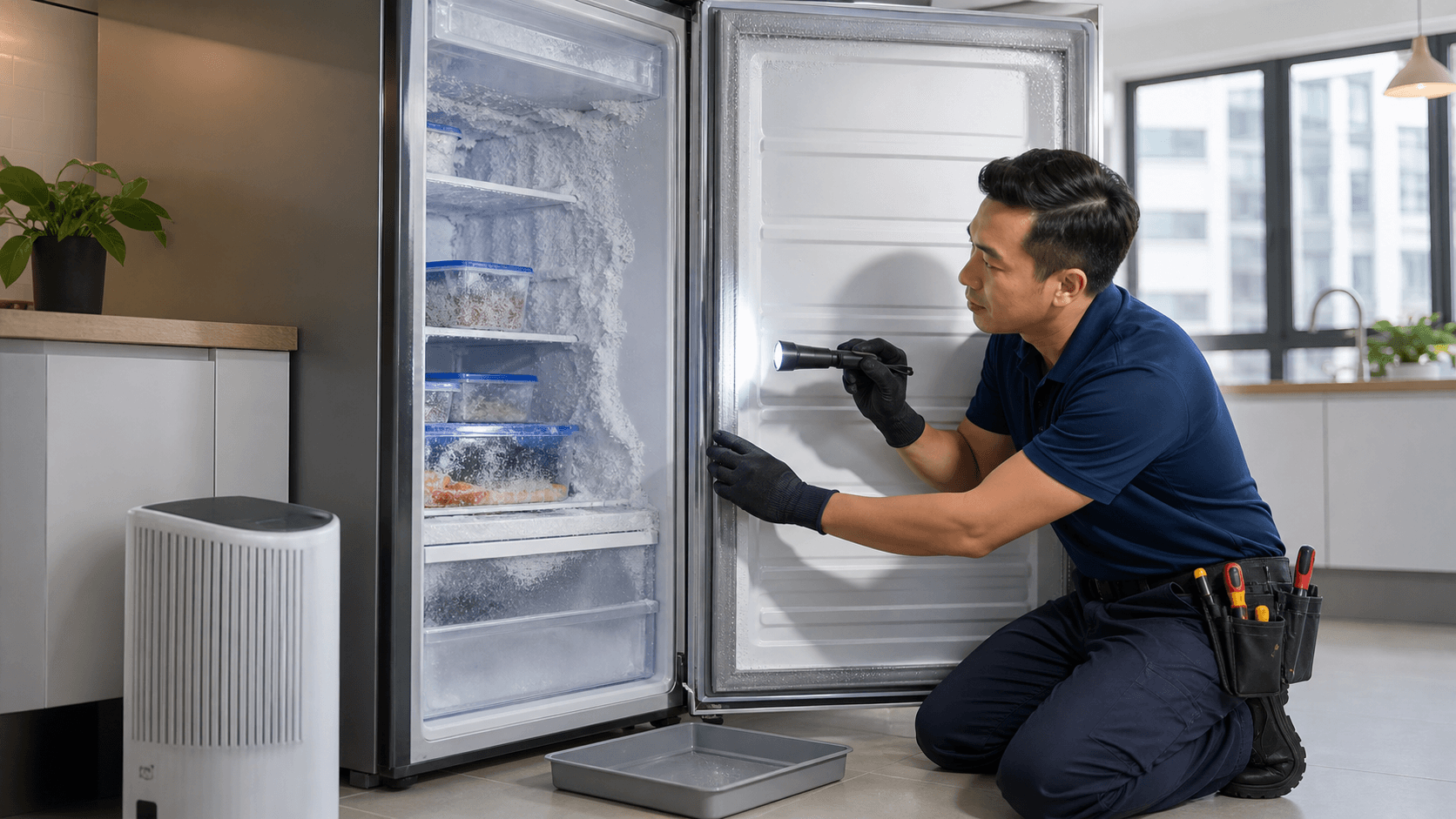
Is your freezer cold but still full of thick white ice? Drawers stuck, plastic containers frozen to the walls, and you are chipping away at frost every few weeks. This is one of the most common problems we see in Singapore homes and food businesses, even when the freezer is technically still cooling.
All that extra ice is not just annoying. It can lead to wasted food, higher electricity use, louder running noises, and uneven temperatures. Food at the back might be rock solid while items near the door stay soft.
In our humid climate, this tends to get worse around the middle of the year, when days feel heavier and busier. We will explain how Singapore's moisture-rich air turns your freezer into an ice factory, what habits make things worse, what you can safely try at home, and when it is time to call a freezer repair specialist for proper help.
How Singapore's Humidity Turns Into Freezer Frost
Humidity is simply water in the air. In Singapore, the air inside your kitchen usually holds a lot of moisture. Every time you open the freezer door, that warm, wet air rushes in and meets very cold surfaces inside.
What happens next is simple science. The moisture in the air cools quickly, turns into tiny water droplets, then freezes. This frost can build up on:
- The inner walls and ceiling
- The shelves and drawers
- The cold evaporator coils hidden behind the back panel
- Air vents where cold air enters the compartment
The big problem is when moist air sneaks in all the time, not just when you open the door. Worn or dirty door seals, slightly bent doors, or items blocking the door from closing fully let a thin stream of humid air slip in all day. That slow leak can create thick ice even if you are careful with door openings.
Cooling may still feel strong, so it looks like the freezer is doing its job. But as ice covers the evaporator coils, it blocks airflow. Then you get:
- Some sections that freeze extra hard
- Other spots that feel too warm or soft
- Fans that start to hit ice and make odd noises
This mix of symptoms often makes people wonder if they need freezer not cooling repair or just another defrost. The truth is, the cause often sits between humidity, airflow, and small hidden faults.
Everyday Habits That Secretly Overload Your Freezer
Freezers do not usually ice up badly overnight. It is often a build-up of daily habits that slowly push the system too hard, especially during hot afternoons and during wet, stormy periods.
Door habits that add extra humidity:
- Holding the door open during meal prep
- Standing in front of the freezer deciding what to cook
- Letting kids or staff open and close the door repeatedly
- Not pushing the door firmly shut when your hands are full
Loading habits that add too much moisture or block airflow:
- Packing the freezer until nothing can move
- Stacking boxes tight against the back wall or over vents
- Placing hot food directly into the freezer
- Storing uncovered food that gives off steam as it cools
Temperature and setting mistakes can also encourage frost:
- Setting the freezer far colder than needed "just to be safe"
- Leaving a quick-freeze or super-freeze mode on for days
- Ignoring the recommended temperature range for frozen food
For most homes and food businesses, a steady, moderate freezer setting works better than the lowest possible number. It gives enough cold without pushing moisture to freeze into thick layers.
Safe Home Fixes to Clear Ice and Cut Humidity Damage
If your freezer is coated in ice but still cooling, a careful reset can sometimes help. One common method is a full manual defrost.
A basic safe defrost routine usually includes:
- Switching off the power to the fridge and freezer
- Moving food to a cooler or spare freezer if possible
- Putting towels and trays to catch dripping water
- Leaving the door open so ice can melt naturally
It may be tempting to chip at ice with knives or other sharp tools, but that can pierce plastic walls, damage coils, or break sensors. Gentle methods are safer, even if they take longer.
Once the ice is gone, a few simple checks can reduce the chance of frost returning fast:
- Wipe door gaskets clean so they seal better
- Remove dust from accessible external coils using a soft brush or cloth
- Clear any visible drainage holes so water can flow out during defrost cycles
- Rearrange food so vents are not blocked and air can move freely
If frost comes back within days, if you hear strange knocking or scraping, or if you notice puddles around the fridge, the problem likely goes beyond normal humidity. At that point, repeated home defrosting is only a short-term patch, and a proper inspection by a freezer not cooling repair technician is usually the safer route.
When Frost Hides Bigger Faults in Your Freezer
Sometimes, heavy frost is not just about humid air. It can be a clue that something in the freezer system is not working correctly.
Door seal and hinge issues are common in busy kitchens. Over time, gaskets can crack, harden, or pull loose. Doors can sag slightly so the top or bottom does not sit tight. Simple checks include:
- Paper test: close a strip of paper in the door and see if it pulls out easily
- Light test: look for light gaps around the door in a dim room
If the paper slips out with no resistance, or if you can see gaps, moist air is likely leaking in even when the door looks shut.
The built-in defrost system can also fail. In many modern fridges, a heater, timer, and sensor work together to melt frost off the evaporator coils at set times. When any part of this system goes wrong, you may see:
- A thick sheet of ice on the back inside wall
- Fan blades that hit ice and click or grind
- Cooling that feels fine after you defrost, then fades again soon
Frost can be linked to more serious issues too, like compressor or thermostat faults. Signs include:
- Compressor running almost non-stop and feeling very hot to the touch
- Freezer temperature that never matches the thermostat setting
- Internal fans not spinning or stopping too often
These are not safe DIY tasks. Trying to fix compressors, sealed systems, or electrical parts without training can be risky and may cause more damage. This is when a professional freezer not cooling repair service is needed to check, test, and repair parts correctly.
Keep Your Freezer Frost-Free with Local Expert Help
In Singapore's climate, a small prevention routine goes a long way. A simple schedule could look like this:
Monthly:
- Wipe and inspect door seals for cracks or mould
- Check that the door closes smoothly without bouncing back
- Look inside for early frost around vents or on the back panel
Quarterly:
- Gently clean accessible external coils and grills
- Reorganise food so air can move around items
- Confirm the thermostat is at a sensible, stable setting
For homes, this keeps food safer and reduces daily stress. For restaurants, cafés, and minimarts, it helps protect stock and avoid downtime during busy service, especially in mid-year periods when kitchens feel extra warm and sticky.
Our team at Singapore Fast Fridge Repair works with both residential and commercial freezers across the island. We focus on rapid, professional help for problems like cooling failures, compressor and thermostat faults, and door seal issues, so your freezer can stay cold without turning into a block of ice.
Restore Reliable Cooling And Protect Your Food Today
If your freezer has stopped keeping food properly frozen, we can diagnose the problem quickly and carry out precise freezer not cooling repair to restore safe temperatures. At Singapore Fast Fridge Repair, we work around your schedule so disruption to your home is kept to a minimum. Reach out to our team today via contact us and we will arrange a prompt visit from an experienced technician.


