
Protecting Your Cold Chain When Fridges Fail
When a chiller fails in the middle of a dinner rush or a festive pre-order peak, every minute counts. Food starts creeping into the danger zone, orders get delayed, and stress in the kitchen shoots up fast. In Singapore's heat and humidity, a commercial fridge problem is never just "an equipment issue,"; it can turn into a food safety and compliance headache if it is not handled properly.
Every restaurant, café, bar, and retail food outlet needs a clear commercial refrigeration emergency SOP. Not a vague idea of "we will move the food and call someone," but a step-by-step playbook that any staff member can follow under pressure. In this guide, we walk through what to do from the first sign of trouble, how to move stock safely to a backup cold room, how to log temperatures for NEA and insurance, when to arrange temporary chiller rental, and how to coordinate urgent commercial fridge repair in Singapore.
A well-practiced SOP protects your food, your revenue, and your reputation. It is especially helpful during festive periods like Chinese New Year, Hari Raya, Deepavali, Christmas, Mid-Autumn, and major event seasons, when loads on your chillers and freezers are highest and you can least afford a breakdown.
Spotting a Fridge Emergency Before It Escalates
Most breakdowns do not start with a dramatic shutdown. They usually begin with small warning signs that are easy to ignore on a busy day. Teaching your team to notice these signs can save stock and stress later.
Common early warning signs include:
- Temperatures on the display creeping up and down
- Ice building up on coils or around doors
- Unusual buzzing, rattling, or clicking sounds
- Water pooling on the floor or under the unit
- Doors not sealing tightly or gaps at the gasket
- Units running non-stop but never reaching the setpoint
Not every warning sign is immediately critical, but it becomes an emergency when the risk to food safety, service continuity, or equipment safety is clear.
It becomes an emergency when:
- A chiller is above 5°C for a prolonged period
- A freezer is warmer than about -12°C for a prolonged period
- There is a strong burning or chemical smell
- Breakers keep tripping when the unit runs
- The unit stops cooling completely during service hours
In the first five minutes, staff should focus on quick confirmation checks and start the record trail immediately, so the team can make decisions based on facts rather than assumptions.
In the first five minutes, staff should:
- Confirm the power source and breaker
- Check the display for error codes or alarms
- Make sure doors are fully closed and vents are not blocked
- Log the current time and temperature reading
Clear communication is key. Decide in advance who needs to be informed, which channel the team should use, and what information must be included in the first alert so the response starts without confusion.
Decide in advance:
- Who must be informed first (manager, kitchen lead, outlet supervisor)
- Which WhatsApp group or internal channel to use
- What message format to follow, for example: unit, location, temp, time
When the right people are alerted quickly, the SOP can start immediately instead of wasting precious time.
Moving at-Risk Stock to Backup Cold Storage Fast
The best time to plan your stock movement is before anything breaks. Every outlet should know exactly where backup cold storage is and how much it can take. This might be an on-site cold room, a shared facility within your group, or a nearby outlet with spare capacity.
Preparation work that helps:
- Map out all backup cold rooms and their capacity
- Keep insulated ice boxes and food-safe containers ready
- Have portable thermometers available and calibrated
- Label shelves and trays by category for quicker transfer
When a unit starts failing, do not just grab whatever is closest. Follow a sequence so the most sensitive items are protected first, and so your limited backup space is used wisely. Prioritise:
- High-risk and high-value items, such as raw seafood, poultry, dairy, and cooked ready-to-eat dishes.
- Frozen stock that is starting to thaw at the edges.
- Lower-risk items, such as bottled drinks and condiments, if there is space.
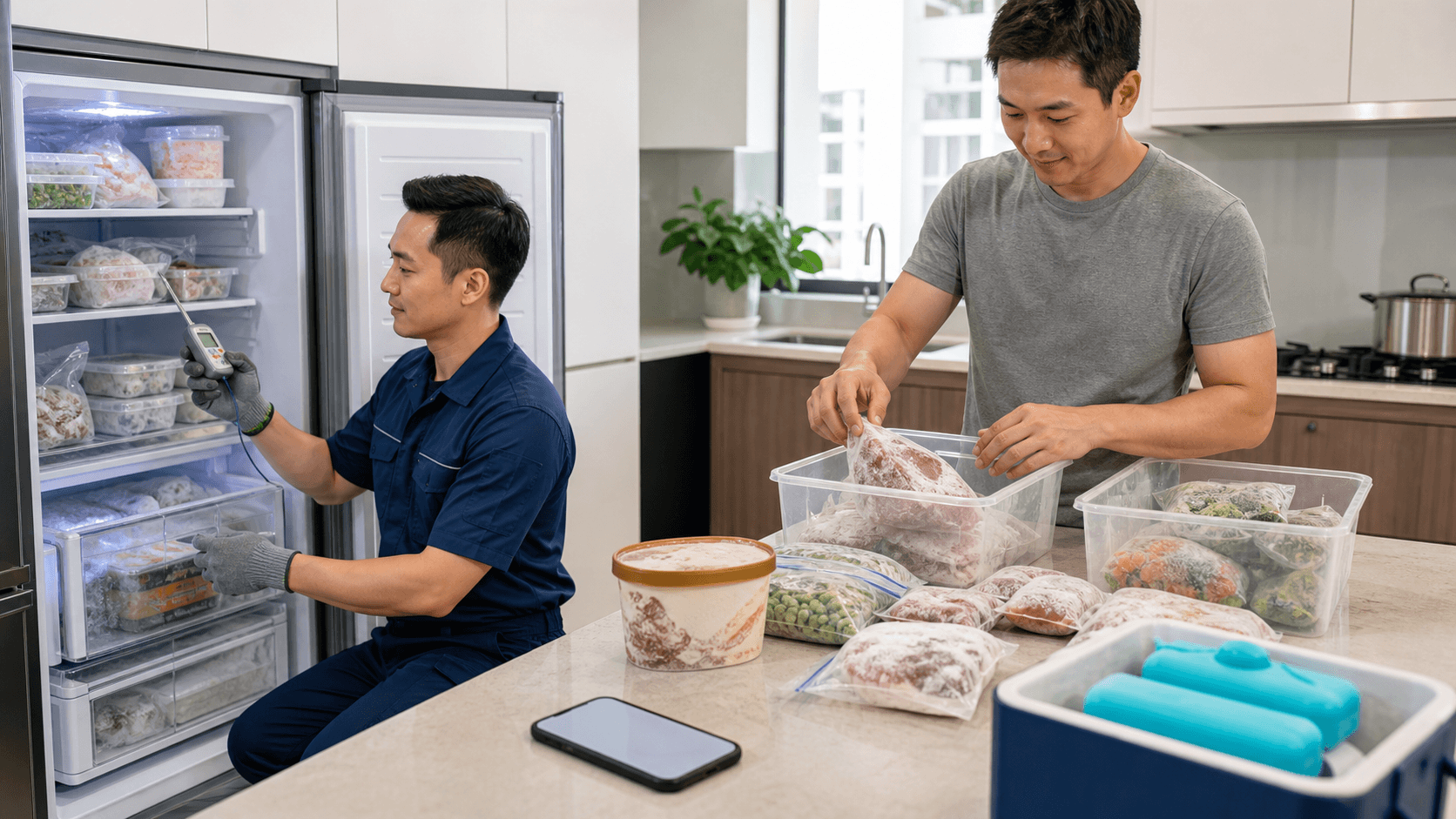
During the transfer itself, the goal is to reduce time in ambient heat and avoid creating new temperature problems in the backup cold room.
To keep food safe while moving:
- Keep the failing unit's door closed as much as possible between runs
- Move in small, organised batches so items do not sit out in room heat
- Confirm that the backup cold room is at the correct temperature before loading
- Avoid overloading shelves so air can still circulate
At the same time, documentation should start. Logging each batch as it moves gives you a simple audit trail that helps later if NEA checks your records or insurers ask what happened to affected stock.
For each batch moved, log:
- Which products were moved
- From which unit and location
- The time of movement
- Temperatures of both the failing unit and the backup storage
This simple audit trail is very helpful later if NEA checks your records or insurers ask what happened to affected stock.
Recording Temperatures for NEA and Insurance Compliance
Good temperature logs protect your outlet when something goes wrong. They show that you noticed the problem, responded quickly, and made decisions based on real readings, not guesses. The aim is to create consistent, time-stamped evidence that tracks both the issue and your actions.
A simple logging framework can include:
- Time of reading
- Unit ID or location, for example: "Prep Chiller 1, Hot Kitchen"
- Temperature reading from a thermometer
- Product category in that unit
- Action taken, for example: moved, discarded, quarantined
- Staff initials
For reliability, keep logs in more than one place. A physical sheet is fast and accessible during service, while a digital record protects you if paper is misplaced and makes sharing easier if you need to submit information later.
We suggest keeping both:
- A physical log sheet near the units
- A digital backup using photos or an app
During an incident, keep the recording cadence tight while the situation is unstable, then document key milestones as you move toward resolution.
During an incident, readings should be recorded:
- Every 15 to 30 minutes until the unit is emptied or stabilised
- When key actions happen, such as technician arrival
- When a temporary chiller is installed and started
- When the original unit returns to safe service
Many logging failures come from rushing or relying on memory. Avoiding a few common mistakes makes your records much more defensible.
Common mistakes to avoid:
- Guessing temperatures instead of using a calibrated thermometer
- Only recording air temperature and ignoring product temperature trends
- Forgetting to record when items are discarded or quarantined
Accurate logs show regulators and insurers that you took food safety seriously at every step.
Securing Temporary Chiller Rental and Professional Repair
There is a point where in-house actions are not enough. If you see signs of obvious component failure, like the compressor not starting, possible gas leak indicators, constant tripping, or no improvement in temperature after your first actions, it is time to bring in external support.
To speed up a temporary chiller or freezer rental request, prepare the details that help a provider match the right unit to your site and deliver it without delays.
For temporary chiller or freezer rental, prepare this information:
- Approximate volume of stock you need to protect
- Required temperature range for the products
- Available power supply and socket type
- Access route for equipment delivery
- Space available for placement and airflow
Having a pre-vetted rental contact before any incident can save you from scrambling during a busy service.
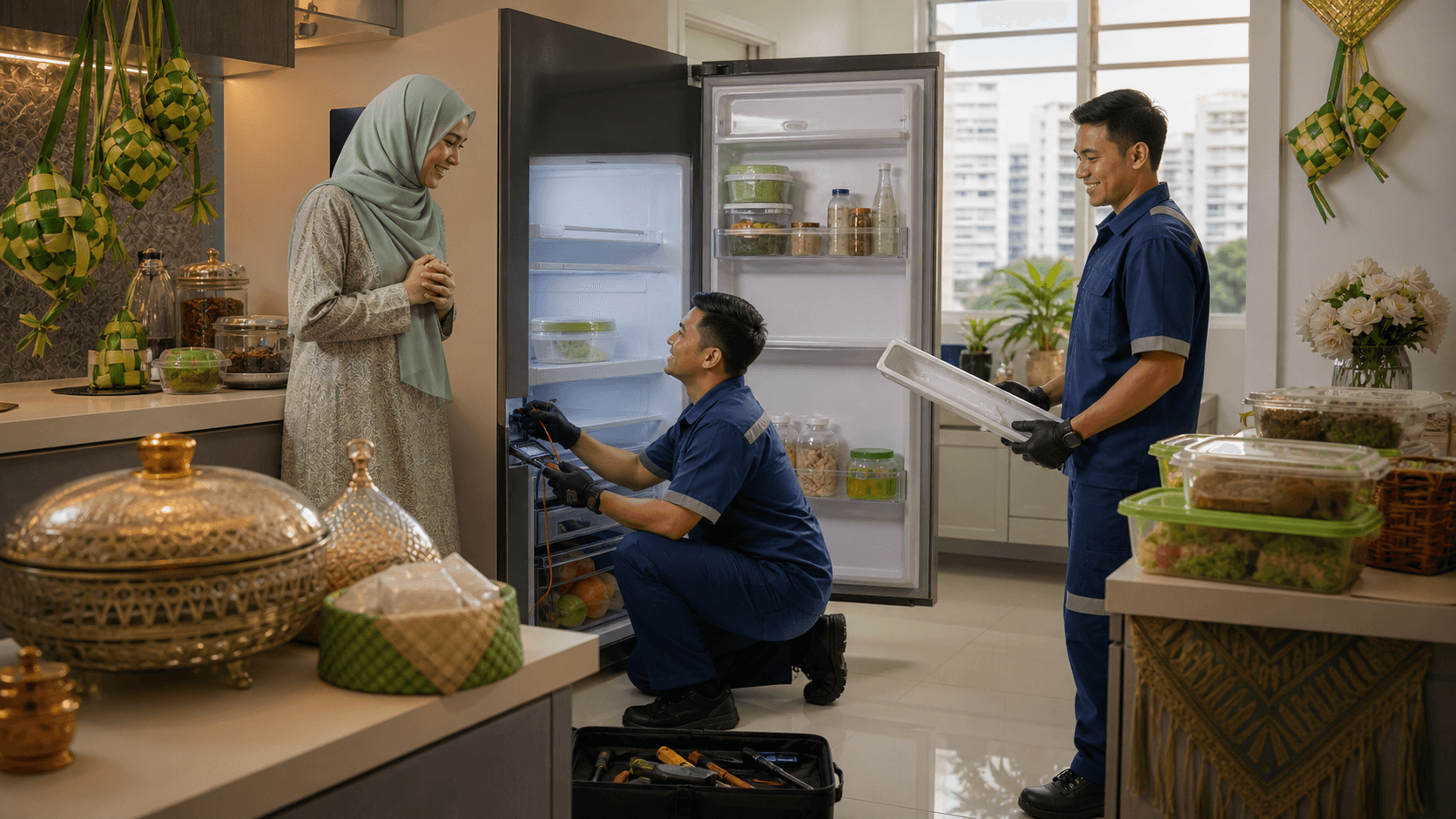
When arranging urgent commercial fridge repair in Singapore, the fastest fixes usually come from the clearest initial report. Share enough context for the technician to bring the right tools and plan around your service flow.
Helpful information includes:
- Brand and model of the unit
- Symptoms and when they started
- Any error codes or warning lights
- Recent service or issues with the same unit
- Photos and temperature logs from your records
A specialist who understands F&B operations and Singapore conditions can work around your service hours, protect your cold chain, and deal with technical issues like gas problems, compressor faults, faulty thermostats, and worn door seals efficiently.
Training Your Team and Prepping Before Peak Seasons
A written SOP is only as strong as the people using it. Staff need to know their role before the first fridge alarm goes off. That is why regular training and practice are so important, especially in outlets with rotating crews or seasonal staffing.
Set up:
- Quarterly briefings that walk through the emergency SOP
- Short practical drills where staff practice moving stock and logging temps
- Clear role assignments for front-of-house and back-of-house during an incident
One helpful tool is a one-page emergency playbook posted near each major unit. It keeps critical information visible during high-stress moments, when staff may not have time to search for contacts or re-read long instructions.
It can include:
- Key contact numbers for management, cold room provider, chiller rental, and commercial fridge repair in Singapore
- A simple step-by-step action list
- A storage priority list that ranks items by risk and value
Before busy seasons like Chinese New Year, Hari Raya, Deepavali, Christmas, or Mid-Autumn, give your refrigeration an extra check so small issues do not turn into peak-period failures.
Before busy seasons like Chinese New Year, Hari Raya, Deepavali, Christmas, or Mid-Autumn, give your refrigeration an extra check:
- Inspect door seals, hinges, and thermostats
- Clear vents and make sure air circulation is not blocked
- Confirm that your emergency partners are available during extended hours
After any incident, gather the team to review what went well and what did not. Update your SOP, refresh contact lists, and rethink stockholding patterns or backup capacity if needed. Each event becomes a lesson that makes your next response calmer and more controlled.
By locking in a clear, practiced commercial refrigeration emergency SOP, restaurants and retail outlets in Singapore can turn a stressful fridge failure into a manageable, well-organised response. With the right steps, the right records, and the right support partners, you can protect your food, your customers, and your brand, even on the busiest days.
Protect Your Business With Fast, Expert Fridge Repairs
When your commercial fridge goes down, every minute of downtime risks lost stock and unhappy customers, so we act quickly to get you running again. At Singapore Fast Fridge Repair, our technicians are trained across major brands, and you can see exactly what we handle on our page for commercial fridge repair in Singapore. If you need urgent help or want to schedule a convenient service slot, simply contact us and we will respond promptly.