Why Your Fridge Always Seems to Fail After Dark
Fridge trouble at night feels extra stressful. You open the door for a late drink, the air feels warm, the ice cream is soft, and your first thought is tomorrow's breakfast or the food you just bought. In Singapore, where the weather is always warm and humid, a fridge that stops cooling can spoil food fast.
Many people notice these problems late at night or early in the morning. Shops are closed, kids still need packed lunches, and food businesses are thinking about the next trading day. It feels like the worst timing, but there are real reasons it happens after dark.
In this guide, we will talk about why night breakdowns are so common in Singapore, power dips and heat soak, how compressor issues show up, and what simple checks you can do before calling a technician for refrigerator compressor repair.
How Singapore's Power Dips Trigger Night Fridge Failures
Evenings in Singapore are heavy power-use hours. Many homes have A/Cs running, rice cookers on, water heaters, washing machines and dryers, plus TVs and computers all at once. All that load on the electrical system can lead to small voltage dips or brief power cuts that you might not even notice, but your fridge does.
Your fridge compressor needs extra power when it starts. It pulls more current for a short moment, a bit like a car working harder to move from a full stop. If the voltage is low or unstable, the compressor can struggle. It may not start properly, it may overheat, or safety parts inside may cut it off. You might see the fridge light working, but the cooling has quietly stopped.
Common signs your problem is linked to power dips include:
- A low buzzing or humming sound from the back, followed by a click, then silence
- The fridge trying to start again and again but never staying on
- Food that is still cool but not getting any colder after an hour
- Lights in the home flickering around the same time the fridge started acting up
A few basic checks you can do safely are:
- See if any breakers in your home electrical panel have tripped
- Ask neighbors if they noticed any power flickers or short outages
- Turn off or unplug other heavy appliances on the same circuit to lighten the load
- Wait a short while, then listen again to see if the compressor manages to start properly
If the fridge keeps clicking off or the breaker keeps tripping, it is a sign you should stop experimenting and let a professional check the compressor and electrical parts.
Night Heat Soak and Poor Fridge Ventilation in Singapore Homes
After a long hot day, your kitchen holds a lot of heat. Cooking, closed windows, and warm walls keep that heat trapped. Even when the sun is down, the counters, cabinets, and floors can still be warm and slowly release heat into the night. This is what we call heat soak.
Many Singapore homes have fridges built into tight kitchen carpentry. Some are pushed right against the wall, squeezed next to ovens, dishwashers, or washing machines. When there is not enough space for air to move, hot air builds up behind and around the fridge, making it much harder for the fridge to push heat out of the system.
When the air around the fridge stays hot through the evening, the condenser at the back cannot cool down as fast as it should. The compressor then works harder, runs longer, and can overheat or shut down. That is when you open the door at night and feel that disappointing warm gust of air.
Simple airflow tips that often help are:
- Keep a few centimeters of space behind and around the sides of the fridge
- Do not stack heavy boxes, rice bags, or trays on top that block heat from rising
- Wipe dusty vents and grills at the back or bottom area
- Avoid shutting tight cabinet doors over the fridge right after heavy cooking
If you give your fridge more breathing room and the same issue keeps returning, especially at night, the compressor may be under too much strain. At that point, it is wise to consider professional checks for deeper refrigerator compressor repair rather than pushing the fridge harder.
When Your Compressor Is the Culprit, Not Just the Weather
The compressor is the heart of the fridge. It moves the refrigerant around the system, pulling heat out of the food compartments and sending it out through the coils at the back or bottom. In Singapore's constant warmth, the compressor often works longer hours, and years of power dips, dusty coils, and tight spaces can wear it down faster.
Some clear warning signs that point to compressor or starting part problems include:
- Loud humming followed by a click, repeating over and over
- The compressor casing at the back is extremely hot to the touch
- The interior light works, but both fridge and freezer are not cooling
- The circuit breaker trips each time the compressor tries to come on
- The fridge cools in the day, but gets warm late at night when the load is higher
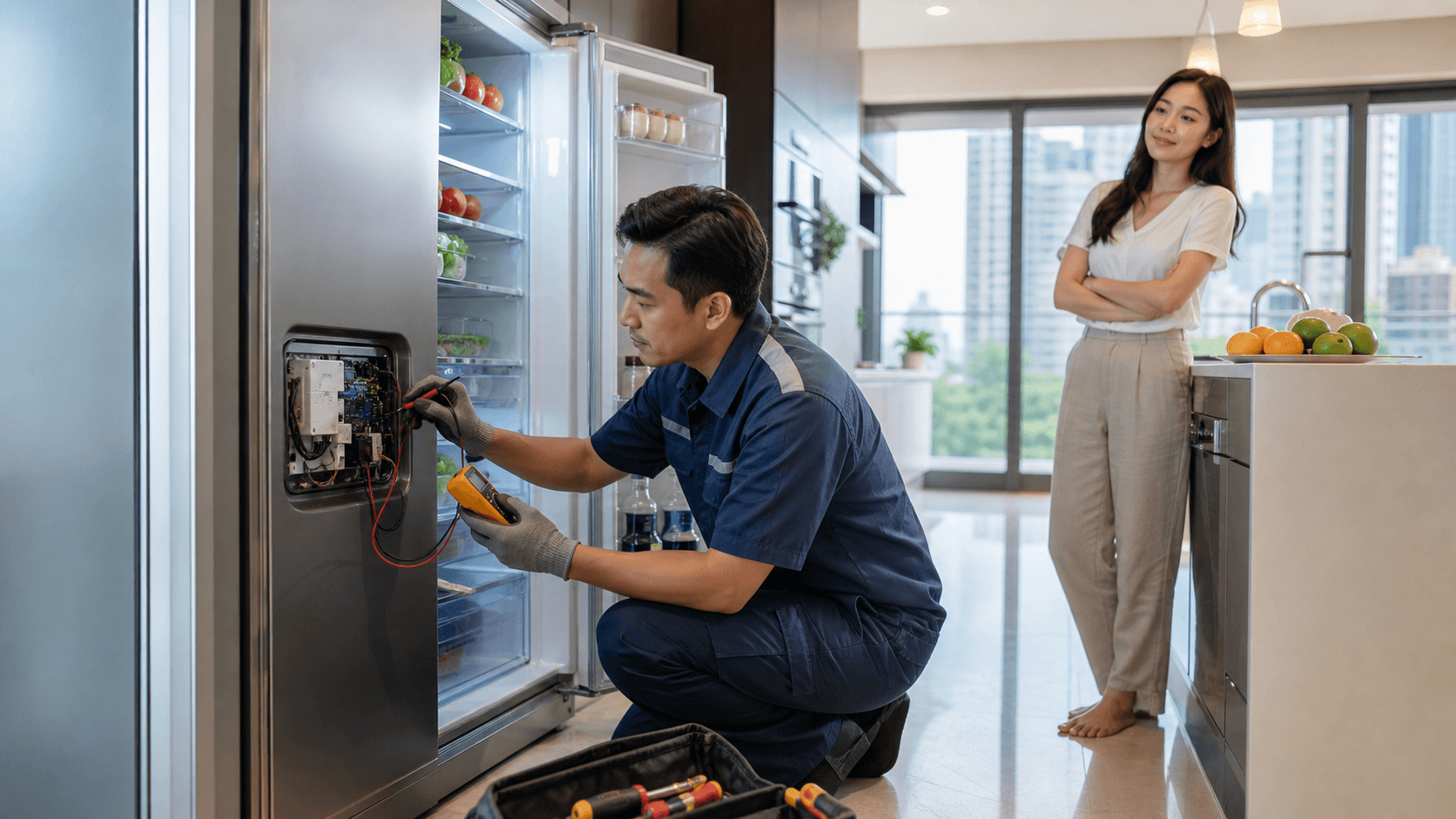
From a homeowner's point of view, real compressor repair is not just changing one part. A trained technician will normally check things like the start relay, overload protector, wiring, and control board before saying the whole compressor is gone. Trying to handle these electrical checks on your own can be risky and may damage the fridge further. A proper test will show whether repair is still a good option or if it is time to think about replacing the compressor or even the unit.
Smart Night Checks Before You Call a Fridge Technician
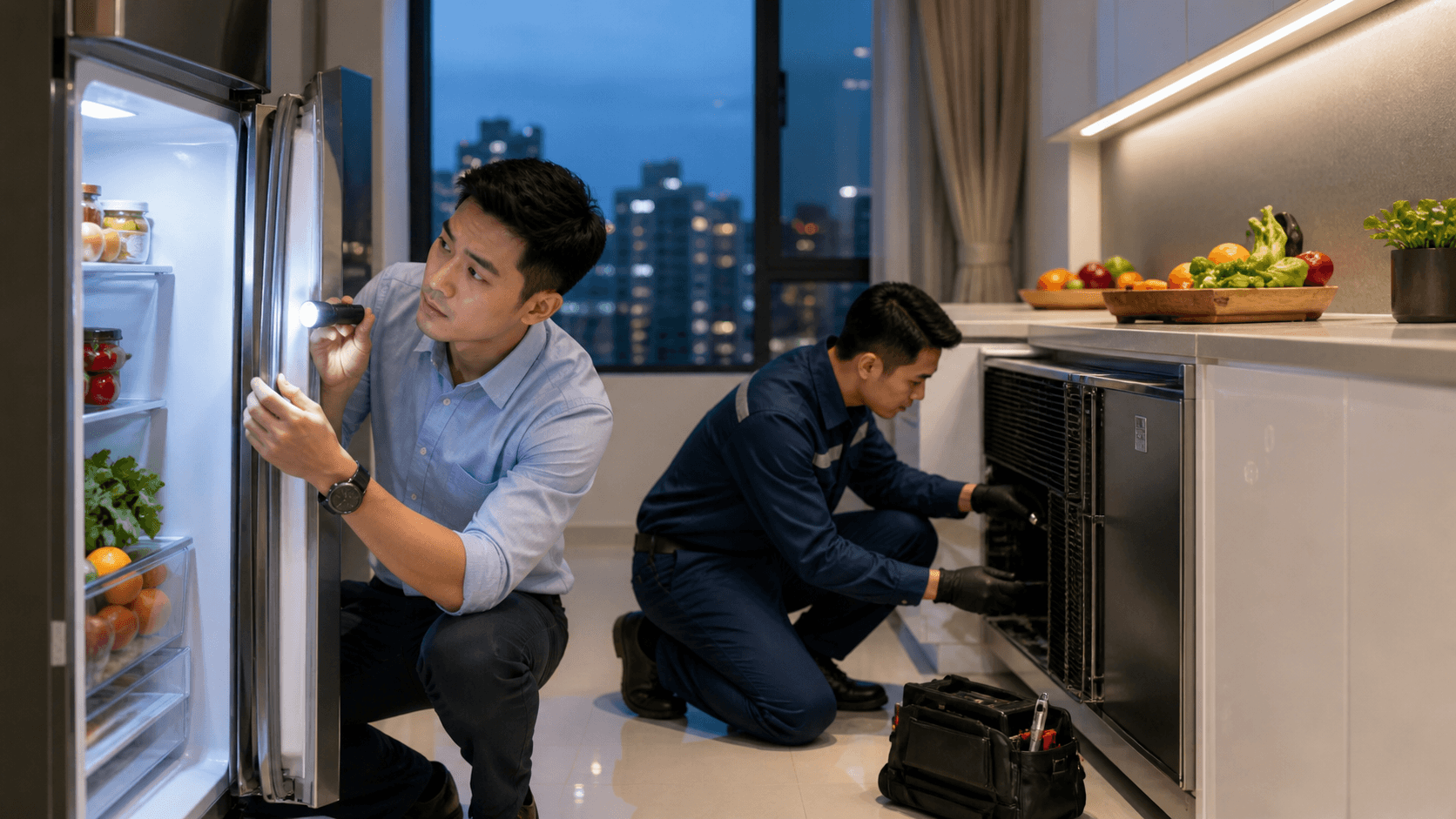
When you feel the fridge warming up at night, it is easy to panic. A short, calm checklist can help you decide what to do next while keeping food as safe as possible. Try to avoid opening the doors too often during these checks, so you keep the cool air inside.
Useful steps you can follow are:
- Confirm there is power at the outlet and that the plug is firmly in
- Listen closely at the back for a steady hum or repeating clicks
- Give the fridge 30 to 60 minutes, then feel if the air is getting cooler or warmer
- Look at the door seals for cracks, dirt, or obvious gaps
- Make sure no large container, bottle, or tray is blocking the door from closing fully
Some easy, safe fixes that sometimes help the fridge recover include:
- Gently pulling the fridge a little away from the wall to improve airflow
- Clearing stacked items from the top so heat can escape
- Turning off a nearby heat source like an oven that is still hot
- Closing doors or windows that are letting hot, humid air blow directly onto the fridge
There are times when you should stop checking and wait for a professional. Do not keep resetting things if you notice burning smells, repeated breaker trips, loud metallic knocks from the compressor, or a sudden total loss of cooling in both fridge and freezer. If you are storing high-value food or stock for a home business or F&B outlet, quick professional refrigerator compressor repair can protect your goods and your sleep.
Protect Your Food and Sleep with Faster Fridge Rescue
Night fridge breakdowns feel dramatic because so much depends on that quiet box in the corner of the kitchen. When your fridge starts running non-stop in the evenings, feels warmer than it should, or makes strange starting sounds, it is better to act early. This is especially true in older HDB and condo kitchens where space is tight and heat builds up easily.
A team that focuses on fast fridge and freezer repair can help you sort out whether your night issue is a simple power or airflow problem, or a deeper compressor fault that needs repair. At Singapore Fast Fridge Repair, we work across the island to help homes and businesses restore cooling quickly so late-night surprises become a lot less scary.
Restore Reliable Cooling With Expert Local Help
If your fridge is running hot, noisy, or not at all, our technicians at Singapore Fast Fridge Repair can quickly diagnose the problem and provide precise refrigerator compressor repair to get it working again. We focus on accurate troubleshooting so you avoid repeat breakdowns and costly food losses. Reach out today to schedule a visit at a time that works for you, or contact us now for fast assistance.