Stop the Damage Fast When Your Freezer Fails
When a freezer not cooling properly happens in hot, humid Singapore, things go bad fast. Food starts to thaw, smells build up, and mould loves the warm, wet space. Acting early helps you save what you can, protect your home, and avoid a huge clean-up later.
Singapore's climate is warm and damp all year. Inside a closed but warm freezer, that moisture turns into the perfect home for mould and bacteria. If you leave it for too long, you can end up with slime, dark spots on the seals, and a stink that is hard to remove.
In this guide, we will walk through what to do in the first hour, how to defrost safely, how to deep clean mould and bad odours, and how to restart in a food-safe way. We will also share some clear signs that it is time to call a professional instead of trying to fix things on your own.
First Hour Response When Your Freezer Stops Cooling
The first hour is about safety and stopping the mess from spreading. Stay calm, move step by step, and do not rush into risky DIY fixes.
Start with quick checks:
- See if the whole house lost power or only the fridge area
- Look at your switchboard for a tripped circuit
- Check if the light inside the fridge is still working
If you smell burning plastic or see smoke, unplug the fridge right away and keep it off. If the power seems normal but the freezer is clearly warm, it is safer to turn it off and keep the door mostly closed until you are ready to act. That slows down sudden temperature swings and limits dripping.
Food safety in a warm climate needs special care. A closed freezer that was fully frozen can sometimes hold food for several hours, but once meat, seafood, or dairy feels soft in the centre or smells off, it should go straight into the bin. Ice cream that has fully melted should be thrown away, not re-frozen. When in doubt, we always suggest discarding it instead of risking food poisoning.
Before you start moving things, prepare your space:
- Thick garbage bags for spoiled food
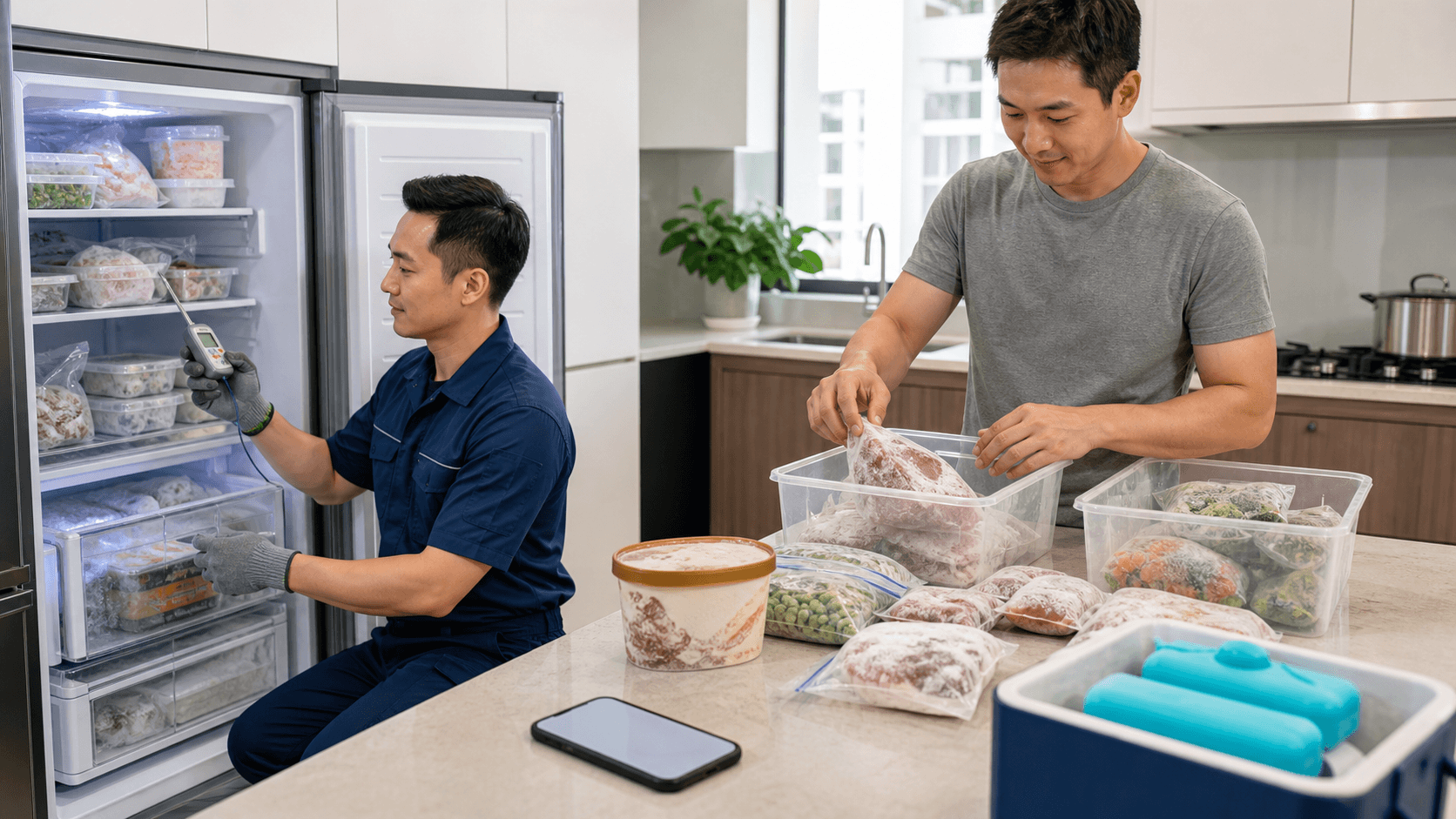
- Cooler boxes or insulated bags with ice packs for items you can still save
- Old towels and rags to soak up water
- Gloves and a simple mask if you are dealing with mould or strong smells
Plan a clear path from the freezer to the rubbish point so any leaks do not soak wooden or laminate floors.
Safe Defrosting Without Damaging Your Freezer
Once you are ready, turn the freezer off and unplug it. Remove all food, even the things you plan to keep, and move them to coolers or another working freezer. Take out shelves, drawers, and baskets so the inside is clear and easy to wipe.
Protect the floor and nearby cabinets. Lay thick towels under the front of the fridge and place shallow trays or containers to catch dripping water. In our humid weather, defrosting can unlock a surprising amount of meltwater.
To speed things up safely, you can:
- Place bowls of hot (not boiling) water on shelves inside the empty freezer
- Close the door most of the way so the warm steam stays inside
- Change the water when it cools
Avoid sharp tools, knives, screwdrivers, hairdryers, and heat guns. These can crack plastic panels or puncture hidden cooling coils, which can turn a simple problem into a major breakdown. Let the ice soften, then gently break off loose chunks with a plastic spatula if needed.
As ice melts, wipe away water often so it does not pool and seep into gaps. Remove any mouldy or rotten food straight into sealed bags and get it out of the house quickly. Open windows or use a fan to keep fresh air moving so mould spores and smells do not linger in the kitchen.
Deep Cleaning Mould, Slime, and Bad Odours
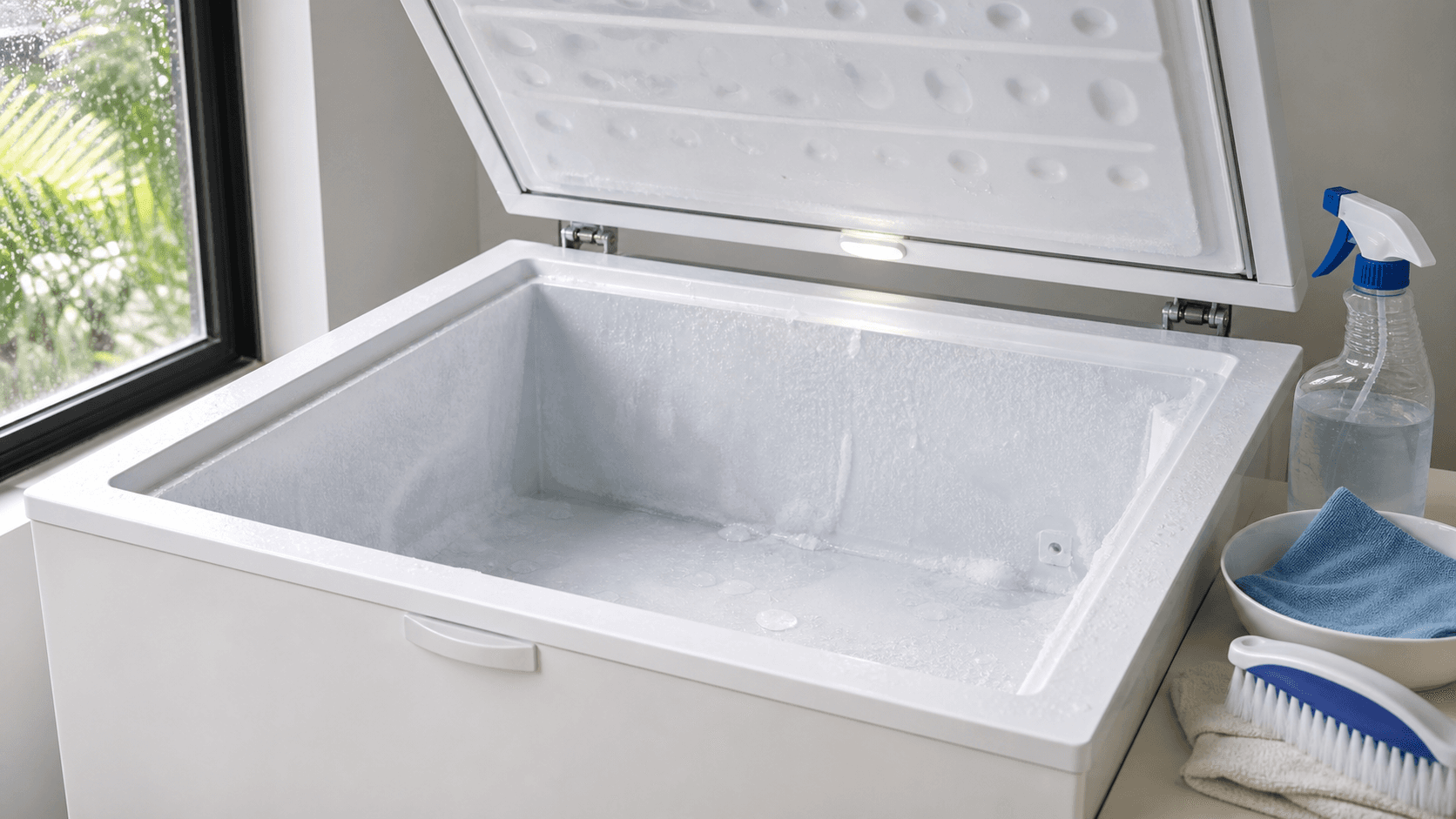
After all the ice has melted, it is time for a deep clean. Start with plain cleaning, then move on to disinfecting. This two-step way helps the disinfectant work better because it is not blocked by grease or slime.
First, wash every surface with warm water and mild detergent:
- Walls, floor, and ceiling of the freezer
- Shelves, drawers, and racks
- The door, including edges and hinges
Pay extra attention to mould hot spots. These often hide in:
- Door seals and the folds of the rubber gasket
- Drainage holes at the back
- Under glass or plastic shelf covers
- Around light fittings and fan vents
Use a soft brush or cloth to clean gasket folds. Do not yank or stretch them. If mould stains stay deep inside the rubber even after good cleaning, that part may need replacement to keep smells and spores from coming back.
After the detergent wash, use a food-safe disinfectant. You can use a diluted bleach solution or a disinfectant that clearly says it is safe for food contact surfaces. Wipe on, let it sit for the contact time on the label, then rinse with clean water if the product requires it.
To tackle odours, simple home items can help:
- An open bowl of baking soda in the empty freezer
- A small cup of white vinegar left inside for a few hours
- Odour absorber packs designed for fridges
Keep the door open and let everything dry fully. In our climate, trapped moisture encourages mould inside insulation and behind panels, so make sure every shelf and corner is dry before you think about restarting.
Food-Safe Restart Checklist in Singapore's Climate
Before you plug the freezer back in, do a quick health check. Look at the power cord and plug. If you see scorch marks, melted plastic, or any damage, do not use it until a technician has inspected it. Check that the door seal is still soft, clean, and sits tightly all around without gaps.
Inside the freezer, make sure:
- All vents are clear and not blocked by ice or panels
- The thermostat knob or digital setting is easy to reach
- Shelves and drawers are dry and slide smoothly
Now do a smart restart. Plug the unit in, then set it to the manufacturer's recommended freezing level. Give it time to cool. It usually takes several hours to reach a stable freezing temperature. Use a standalone thermometer in the centre of the freezer to confirm that it is cold enough before loading food. This is especially important if the freezer was not cooling properly earlier, as you need to be sure the problem is truly fixed.
When you restock, follow these tips:
- Only return food that stayed fully frozen, with hard centres and no bad smells
- Do not re-freeze items that were fully thawed, especially meat and seafood
- Place newer food behind older items and label with dates
- Leave some space between items so cold air can move freely
Over the next few days, keep an eye and your nose on things. If you notice new frost only on one side, soft food, or the same old smells coming back, there may still be an underlying fault.
When to Call Singapore Fast Fridge Repair for Help
Sometimes a freezer not cooling is more than a simple power blip or door left open. There are clear warning signs that point to deeper trouble that needs professional tools and skills.
Watch out for:
- Freezer staying warm or only slightly cool after a full restart period
- Compressor running all the time or not starting at all
- Knocking, clicking, or buzzing sounds you have never heard before
- Burning smells or hot spots on the sides of the unit
- Rust, oil stains, or wet marks around pipes at the back
- The circuit breaker tripping again when the fridge turns on
In Singapore's climate, freezers have to work hard every single day. DIY gas top-ups, guesswork repairs, or damage from sharp tools during defrosting can reduce cooling performance and push up electricity use. That can lead to more food loss, especially during school holidays or festive periods when you store extra food at home or in a business.
At Singapore Fast Fridge Repair, we deal with these issues daily across the island. Our technicians inspect thermostats, compressors, and cooling systems, and help you understand if repair or replacement makes more sense. We focus on getting your fridge or freezer cooling reliably again so your food stays safe and your kitchen or business can get back to normal.
Restore Reliable Cooling In Your Kitchen Today
If you are worried about a freezer not cooling, we can diagnose and fix the problem before your food spoils. At Singapore Fast Fridge Repair, our technicians work quickly to get your appliance back to the right temperature with minimal disruption to your home. For fast booking and clear pricing, simply contact us and we will arrange a convenient repair slot.