
Keep Your Fridge Alive Longer in Singapore's Heat
A fridge in Singapore never gets a break. With our hot and humid weather, it is running all day, every day, to keep food safe and drinks cold. During festive seasons like Hari Raya, Deepavali, and year-end gatherings, it works even harder as we pack it full of dishes and open the door non-stop.
What many households do not realise is that some normal habits slowly damage the fridge from the inside. These habits can push up electricity bills, spoil food faster and lead to sudden breakdowns. At Singapore Fast Fridge Repair, we see the same small mistakes again and again, and the good news is that many of them are easy to change.
In this article, we will share everyday habits that quietly strain your fridge in a Singapore home, simple ways to reduce that stress and how to tell when the problem is bigger than it looks and needs a professional fridge repair service in Singapore.
Overloading and Poor Airflow Inside the Fridge
When there is a big family dinner coming up, the first instinct is to cram every shelf with food. That is very common during festive periods. The trouble is, your fridge needs space for air to move. Cold air flows from vents, across the shelves and back again. If these vents and gaps are blocked, the compressor has to work much harder.
Some common storage habits cause problems, such as:
- Pushing containers right against the back wall
- Stacking food all the way up to the top, close to the fan area
- Covering each shelf completely with trays, boxes or plastic liners
- Stuffing the door shelves so full that the door struggles to close
When this happens, some areas get too cold and others stay warm. Food in the warm spots can spoil early even though the fridge feels cold when you open it.
Better habits that help your fridge breathe include:
- Leave a small gap around the back wall and side vents
- Use stackable containers, but keep a little space between each stack
- Avoid thick plastic mats that block the holes in the glass shelves
- Do a quick check every few days to check for items blocking the fan area
If you notice certain corners are always warmer or items there spoil faster, that is a sign airflow inside the fridge is not right.
Constant Door Opening and Warm Food Storage
In many homes, the fridge door opens every few minutes. Children look for snacks, someone grabs ice water, another person is hunting for sauces. Every time the door opens, hot humid air from the kitchen rushes in and the fridge must cool that air down again.
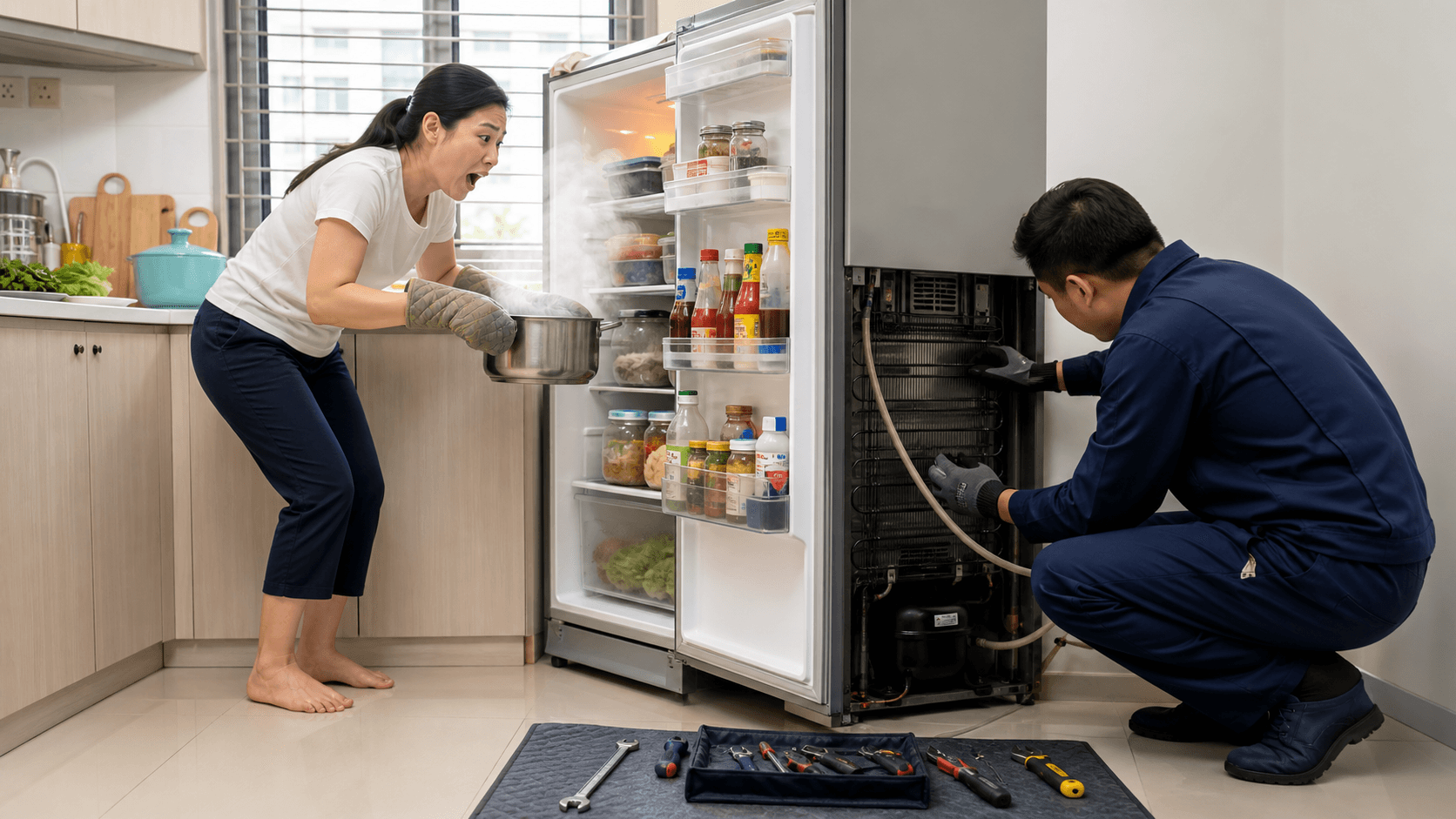
There are also cooking habits that add stress. Putting hot pots of soup, rice or curry straight into the fridge sends a burst of heat inside. The thermostat senses the higher temperature and the compressor stays on longer and more often. Over time, this can shorten the lifespan of key parts.
To be kinder to your fridge, try some small changes:
- Plan what you need before opening the door so you do not stand there with the door wide open
- Keep common items like drinks, spreads and sauces together for quick grabbing
- Let cooked food cool on the counter until it is warm, not steaming hot, before putting it in
- Check that the door closes firmly and that any door alarm works properly
These habits keep the temperature more stable, which is better for both food safety and the working life of your fridge.
Wrong Placement, Poor Ventilation and Heat Sources
In many HDB and condo kitchens, space is tight. Fridges often end up squeezed into narrow gaps, right against a wall or under cabinets. While this may look neat, it can trap heat around the back of the fridge where the condenser needs cooler air.
Placing the fridge next to strong heat sources also causes problems. Common examples include:
- Right beside the oven or hob
- Next to a dishwasher that vents warm, moist air
- In front of a window that gets strong afternoon sun
All this extra heat means the fridge has to run longer to keep the inside cool.
To give your fridge a better working environment, it helps to:
- Leave the recommended gap at the sides and back so air can move
- Avoid fully boxed-in cabinet designs unless there are proper vents
- Use curtains or blinds to cut down strong sunlight on the fridge surface
- Gently vacuum or wipe dust off exposed coils if they are safely reachable
If the surrounding area feels very warm to the touch, especially behind the fridge, that is a sign ventilation may be poor.
Unsafe Temperature Settings and Neglected Seals
Many people treat the thermostat dial like a volume knob, turning it up and down often. Some set it too cold just to be safe, which can cause frost build-up and extra strain. Others set it too warm thinking it will save electricity, but this can let food sit at unsafe temperatures.
Door gaskets, or seals, are another common problem area. Over time, they can wear out, crack or get dirty with food and mould. When the seal is not tight, warm humid air slips in even when the door looks closed. This can lead to:
- Frost building up inside the freezer
- Water leaking out onto the floor or shelves
- Uneven cooling, where some sections never feel cold enough
Simple checks at home can catch issues early:
- Close the door on a piece of paper; it should grip firmly when you pull
- Clean the seals gently with mild soapy water and a soft cloth
- Keep the freezer and fridge at the recommended settings and avoid frequent changes
- Place a basic fridge thermometer on a middle shelf and check if the reading is stable
If the thermometer shows big swings or the fridge cannot hold a safe temperature even after small habit changes, there may be a deeper fault.
Know When DIY Stops and Experts Step In
There is a safe line between everyday care and risky DIY. Wiping shelves, clearing clutter and checking seals are fine. Opening back panels, handling electrical parts or trying to top up gas are not. These jobs can be dangerous and can also damage the fridge further.
Some warning signs usually mean it is time to call a professional fridge repair service in Singapore:
- Loud or strange noises that do not go away
- Parts of the fridge staying warm even after you improve airflow and habits
- Power to the unit tripping again and again
- Strong burning or chemical smells
- The fridge or freezer not cooling even after basic checks
A trained technician can inspect the unit on site, trace the real cause and advise if it is better to repair or start planning a replacement, especially for older fridges.
Protect Your Fridge Today Before It Fails Tomorrow
Small daily choices really do affect how long a fridge lasts in our hot and humid climate. Avoiding heavy overloading, cutting down unnecessary door opening, cooling food before storage, keeping the fridge in a well-ventilated spot and checking temperatures and door seals can all lighten the load on the compressor and other parts.
At Singapore Fast Fridge Repair, we work with fridges across the island and see how these simple habits help prevent sudden failures. A quick "fridge health audit" at home, using the ideas above, is a smart step before busy festive periods or whenever you notice food spoiling faster than it should. If issues continue even after you adjust your habits, that is usually the right moment to get a professional eye on the problem before it turns into a full breakdown.
Restore Your Fridge And Protect Your Food Today
If your fridge is making strange noises, not cooling properly or showing warning lights, our team at Singapore Fast Fridge Repair is ready to help. Explore our fridge repair service in Singapore to see how we handle all major brands with reliable diagnostics and repairs. To book a visit or ask a quick question, simply contact us and we will arrange a convenient time to get your fridge back to optimal performance.


