Keep Your Freezer Cooling Strong in Singapore's Heat
A freezer not cooling properly in our hot, humid climate is more than a small headache. Food can soften fast, odours build up, and ice forms in strange places, all while the motor works harder in the background. If this carries on, you can end up with spoiled food and a tired compressor.
Things often get worse around May and June. Kitchens feel hotter, humidity is high, and there are school holidays and gatherings, so the freezer door opens more often and for longer. The good news is that a simple checklist can keep your freezer steady, help you catch early warning signs, and show you when it is time to let a professional handle it. As fridge specialists here in Singapore, we want to share what we look out for in our own homes.
Check Temperature Settings Before Food Starts Thawing
For most home freezers, a good target is around -18°C. Colder is not always better. If you push the setting too low, the freezer can struggle, use more electricity, and build extra frost, yet still not cool evenly.
Here is how we suggest checking your settings:
- On dial controls, a higher number often means colder, but not always, so a quick look at the user label inside the fridge helps.
- On digital panels, confirm the display is on the freezer section, not the fridge section, before changing.
- For top- or bottom-mount fridge-freezer combos, remember that one thermostat can control both sections, so large changes affect the fridge too.
- For chest freezers, avoid turning the dial straight from low to maximum, move one step at a time.
We also like using a separate fridge or freezer thermometer. Leave it inside for a full day, without moving it too much. This is very useful when:
- Food feels softer than usual.
- Ice cream turns slushy at the sides of the tub.
- The panel looks normal but your freezer not cooling problem keeps coming back.
During hotter periods, try not to load the freezer with many warm items at once. If you return from a big grocery run, you can:
- Split the load and freeze in two rounds.
- Let cooked food cool safely on the counter first, without leaving it out too long.
- Spread packets out instead of stacking them tightly.
These small habits reduce sudden temperature swings and help the motor keep up.
Clean Dirty Coils so Your Freezer Can Breathe
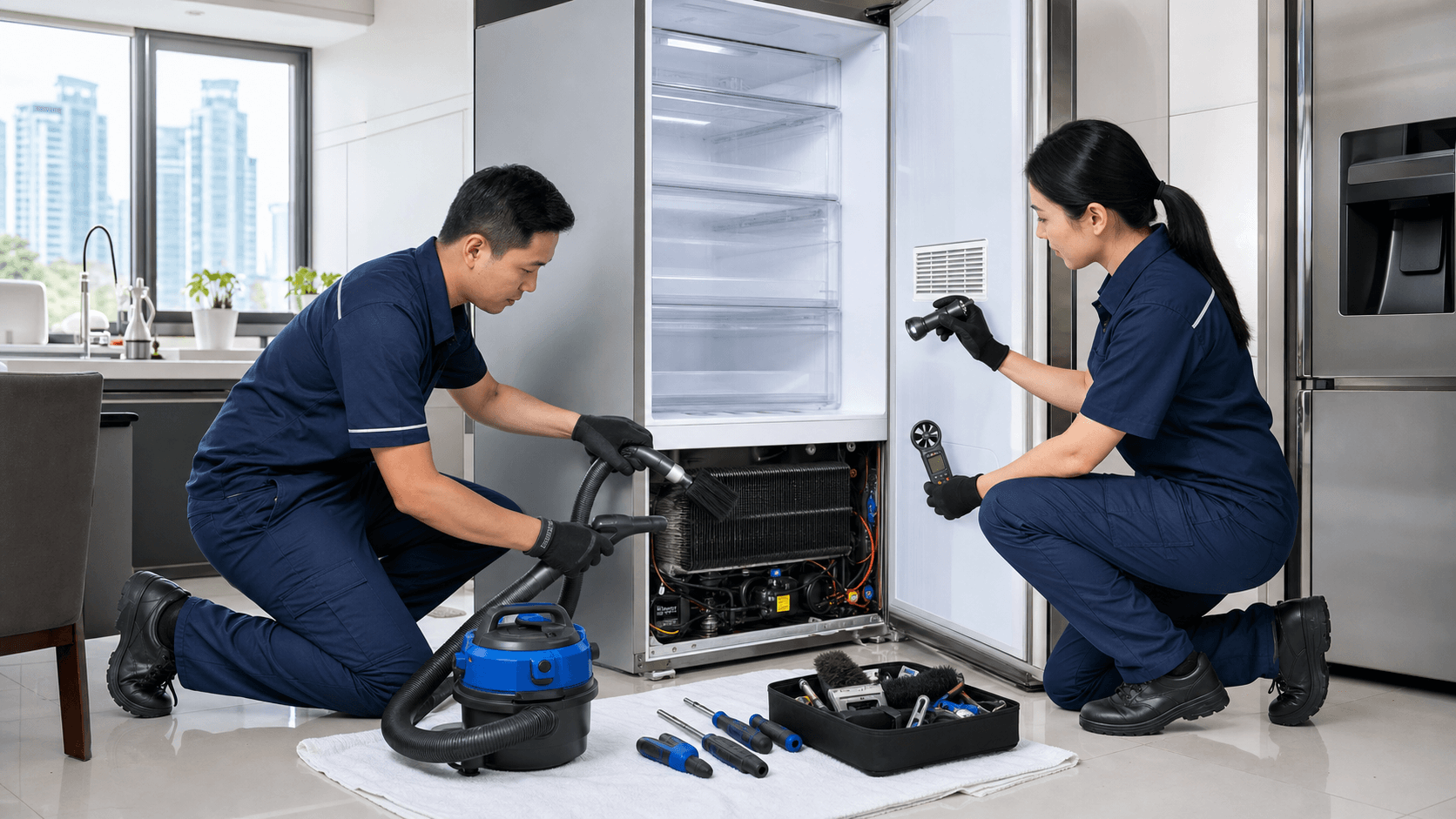
The condenser coils are where the fridge system sends heat out into the room. When dust, pet hair, or greasy film cover these coils, the freezer holds on to more heat, so the compressor runs longer and still might not cool well.
You can usually find the coils:
- At the back of older or simpler units, a dark, metal grill.
- Behind a small grille at the bottom front of many modern fridges and freezers.
Basic steps we recommend:
- Switch off and unplug the appliance for safety.
- Pull it out gently if you need to reach the back.
- Use a soft brush or a coil-cleaning brush to loosen dirt.
- Use a vacuum nozzle to suck up dust, rather than wiping with a wet cloth.
We suggest a light clean every 3 to 4 months, with extra attention just before and after hotter parts of the year. If the coils are very clogged, your freezer not cooling issue may improve only after a day or so, once the system settles.
Cleaning is not enough if you notice:
- The compressor is very loud or feels too hot to touch briefly.
- A sharp or burning smell.
- The electrical circuit keeps tripping.
- There is no cooling improvement after 24 hours of careful cleaning and monitoring.
Those are signs a trained technician should inspect the system, as there may be deeper issues inside.
Protect the Cold Air with Tight, Clean Door Seals
Door seals, also called gaskets, keep cold air in and moist air out. When they are dirty, torn, or warped, warm, humid air slips in around the edges. This can cause thick frost near the leak area, higher energy use, and temperature swings that feel like a freezer not cooling problem, even when the compressor is fine.
We like a simple paper test:
- Close a thin sheet of paper in the door.
- Gently tug it. If it slides out with no resistance, that spot is weak.
- Repeat at several points around the door.
Also take a close look for:
- Cracks or splits in the rubber.
- Areas that look twisted or not sitting flat.
- Mould, sticky residue, or food bits stuck in the folds.
A gentle cleaning routine helps a lot:
- Wipe seals once a month with mild soapy water and a soft cloth.
- Dry them well so they stay flexible.
- Do not use harsh chemicals or sharp tools.
- Make sure containers or ice build-up are not blocking the door from closing fully.
If the seal feels hard, brittle, or clearly does not hug the frame all the way round, it is usually time to replace it. Getting a professional to fit a new gasket makes sure the corners line up and the door closes evenly, which protects the cooling system and keeps indoor humidity out of the freezer cavity.
Improve Airflow Inside and Around Your Freezer
Cold air needs space to move. When vents are blocked, some areas freeze rock solid while others warm up. That is why a common clue for airflow trouble is when items near the door are soft but food at the back feels like a brick.
Inside the freezer, try to:
- Keep vents and the back wall clear, do not press bags or boxes right against them.
- Use baskets or containers to organise food and avoid overpacking.
- Leave a small gap above the top layer in chest freezers so air can circulate.
Outside the freezer, airflow matters too. As a general guide:
- Leave some space between the unit and the wall at the back and sides.
- Keep the area around the rear and sides free of boxes or stored items.
- Avoid placing the freezer right next to hot appliances or in direct sun.
Frost also blocks airflow. On models that are not frost-free, book in regular defrosting before ice gets too thick. Safe basic steps are:
- Switch off and unplug the unit.
- Move food to a temporary cooler if needed.
- Let the ice melt on its own or with bowls of warm water inside.
- Never chip ice with sharp tools. This can damage pipes and walls.
Watch for airflow warning signs like a noisy fan, a thick pile of frost in just one section, or a patch of ice around a vent. These point to an air movement issue, instead of a full loss of cooling gas.
When Simple Maintenance Is Not Enough
If your freezer not cooling problem shows up, there are a few quick checks we suggest before worrying about major faults:
- Confirm the power supply and plug are secure.
- Check that temperature settings are correct and have not been changed by accident.
- Make sure vents inside are not blocked by bags or boxes.
- Inspect and clean door seals.
- Clean the condenser coils and allow 12 to 24 hours for temperatures to stabilise.
If things still do not feel right, deeper issues could be present. Warning signs include:
- Loud clicking or buzzing from the compressor area without proper cooling.
- Constant beeping or error codes on the display.
- Puddles forming on the floor around the unit.
- A sudden strong chemical or gas-like smell.
In Singapore's warm climate, food in a freezer that is not cooling can become unsafe quickly, and forcing the appliance to struggle for days may damage the compressor or other key parts. This is the point where a fast, on-site check by a fridge specialist is the safest choice. At Singapore Fast Fridge Repair, we help homeowners across the island sort out these problems early, so cooling performance returns before food spoils and before small faults grow into major breakdowns.
Restore Reliable Cooling In Your Freezer Today
If you have noticed your food starting to thaw or ice cream turning soft, our specialists can quickly diagnose and fix any freezer not cooling issues before they worsen. At Singapore Fast Fridge Repair, we provide prompt on-site assessments and straightforward recommendations so you know exactly what is going on with your appliance. Reach out to our team today via contact us and we will arrange a convenient time to restore your freezer's performance.


